
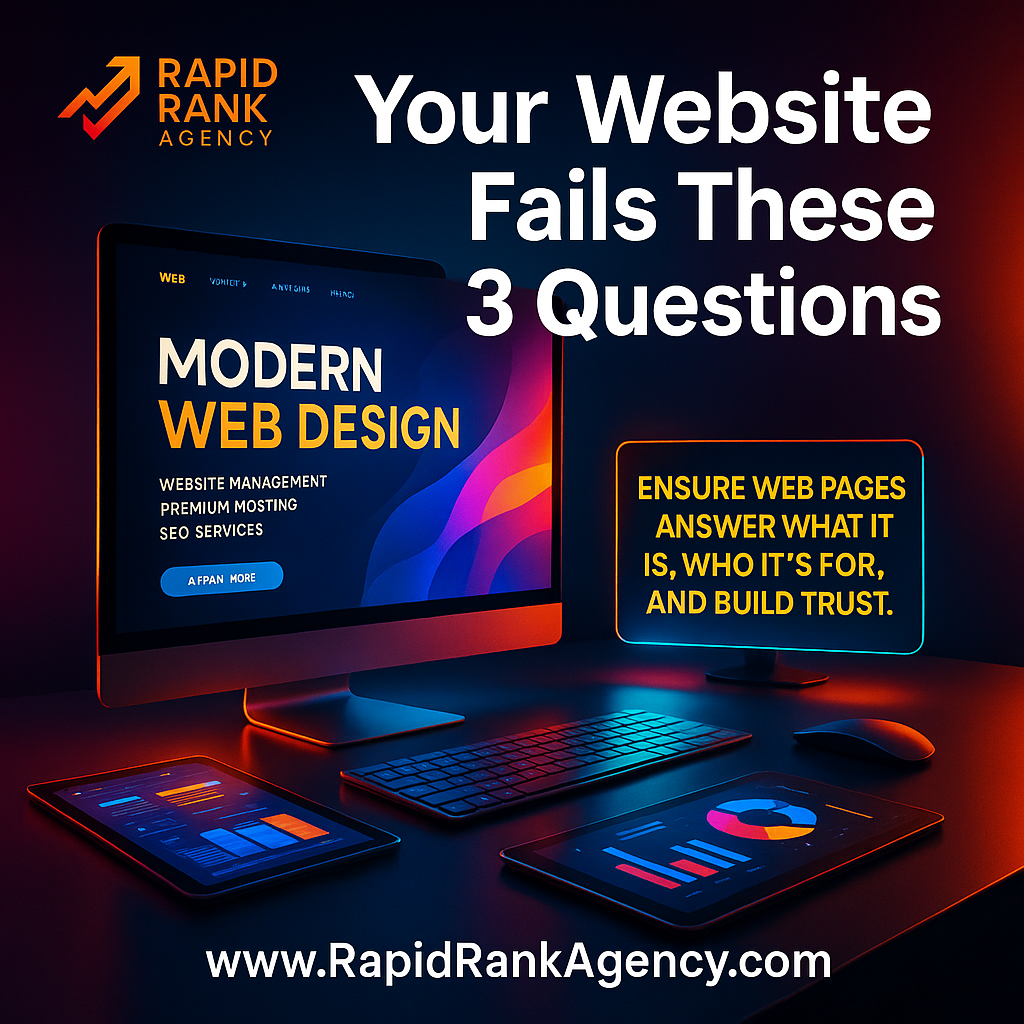
Your Website Fails These 3 Questions
**The Three Core Questions Every Web Page Must Answer**
In today’s digital age, a company’s website is often its most critical marketing tool. This is where potential clients or customers first interact with your brand, and it’s essential to make that interaction as seamless and informative as possible. However, many businesses overlook the key components that make a web page truly effective. These components boil down to three essential questions that every page on your website needs to answer right away: What is this? Is this for me? Can I trust this?
**Personal Insights Into Web Pages**
Reflecting on my own experiences with websites, I am reminded of numerous occasions where I clicked away from a page simply because it didn’t communicate clearly what it was about. I’m sure you’ve had similar experiences. You land on a page that seems promising, but after a few seconds, you’re either confused or feel that the content is not relevant to you.
For instance, imagine visiting a website that promotes its service as a leading solution in digital transformation. The headline might read, “Revolutionizing Digital Interactions,” but without further clarification, this statement is equivalent to jargon-filled riddles. It’s imperative that businesses explain their offerings plainly. It’s about communicating your service or product as you would to a smart friend unfamiliar with your business. Phrases like “We help e-commerce brands reduce cart abandonment” instantly clarify what the business does, saving the visitor a guesswork game. This clarity is not just beneficial—it’s absolutely necessary.
**Identifying the Right Audience**
Moving onto the second question, “Is this for me?”—it’s crucial for every page to identify and speak directly to its intended audience. A web page that lacks a clearly defined audience ends up speaking to no one in particular. For example, if you’re targeting small business owners struggling with inventory management, your page should directly speak to these individuals by identifying their situation, problems, and goals.
When visitors recognize themselves in your narrative, they are more likely to engage with your content deeply. You might see this as stating the obvious, but time and again, businesses miss the mark by generalizing their message. They cast a wide net hoping to catch every possible client instead of honing in on their specific target audience.
Consider how a landing page for an online wellness program can benefit from this approach by explicitly stating, “For busy professionals seeking stress relief and productivity boosts.” Such specificity not only resonates with the intended audience but also increases the likelihood of conversion.
**The Importance of Building Trust Online**
Now, let’s delve into the third essential question: “Can I trust this?” Trust is a critical part of any business relationship, and establishing it on a digital platform requires deliberate effort. Trust signals, like testimonials and logos of recognizable brands you’ve worked with, should accompany claims immediately on your site. In other words, don’t make people scroll for evidence; instead, provide it right where it’s needed.
One effective way to build trust is by placing recognizable logos next to claims of helping specific businesses. For example, if your company claims to have increased conversion rates for various e-commerce brands, use logos of those brands right there. Additionally, testimonials are invaluable—real words from real clients can make a significant difference in the potential client’s decision-making process.
Moreover, clear demonstration of expertise through content is vital. A website blog featuring industry-related articles and insights not only shows expertise but can act as a source of added value for visitors. For instance, a well-crafted blog post on “5 Tips to Reduce Cart Abandonment in Your E-Commerce Store” not only showcases your knowledge but also establishes credibility.
**A Haunting Mistake and the Learning Moment**
You might think you’re meeting all these criteria only to realize later you weren’t clear enough. I recall a project where the focus was too much on brand language rather than straightforward communication. It ended up costing us potential engagements as the visitors couldn’t easily decipher what the company did or who it catered to. This mistake highlighted the importance of clarity and trust-building elements like testimonials right away.
By emphasizing these three critical questions, businesses can overhaul their web pages to better serve their audiences and, ultimately, their bottom lines. Every visitor should know at a glance what it is you offer, determine if it suits their context, and feel assured that trusting you is a sound decision.
**Emotional Closer: Are You Ready to Transform Your Website?**
Why wait to make a vital transformation to your online presence? Dive into your website from a new perspective—your audience’s. Can every visitor immediately grasp what you offer, find relevance in your content, and establish trust in your brand? This reevaluation doesn’t just benefit your web presence; it enhances the entire perception and accessibility of your brand in an increasingly competitive digital marketplace. So, ask yourself: Are you prepared to ensure your website answers what it is, who it’s for, and builds the right level of trust? Now is the time to make the shift.