
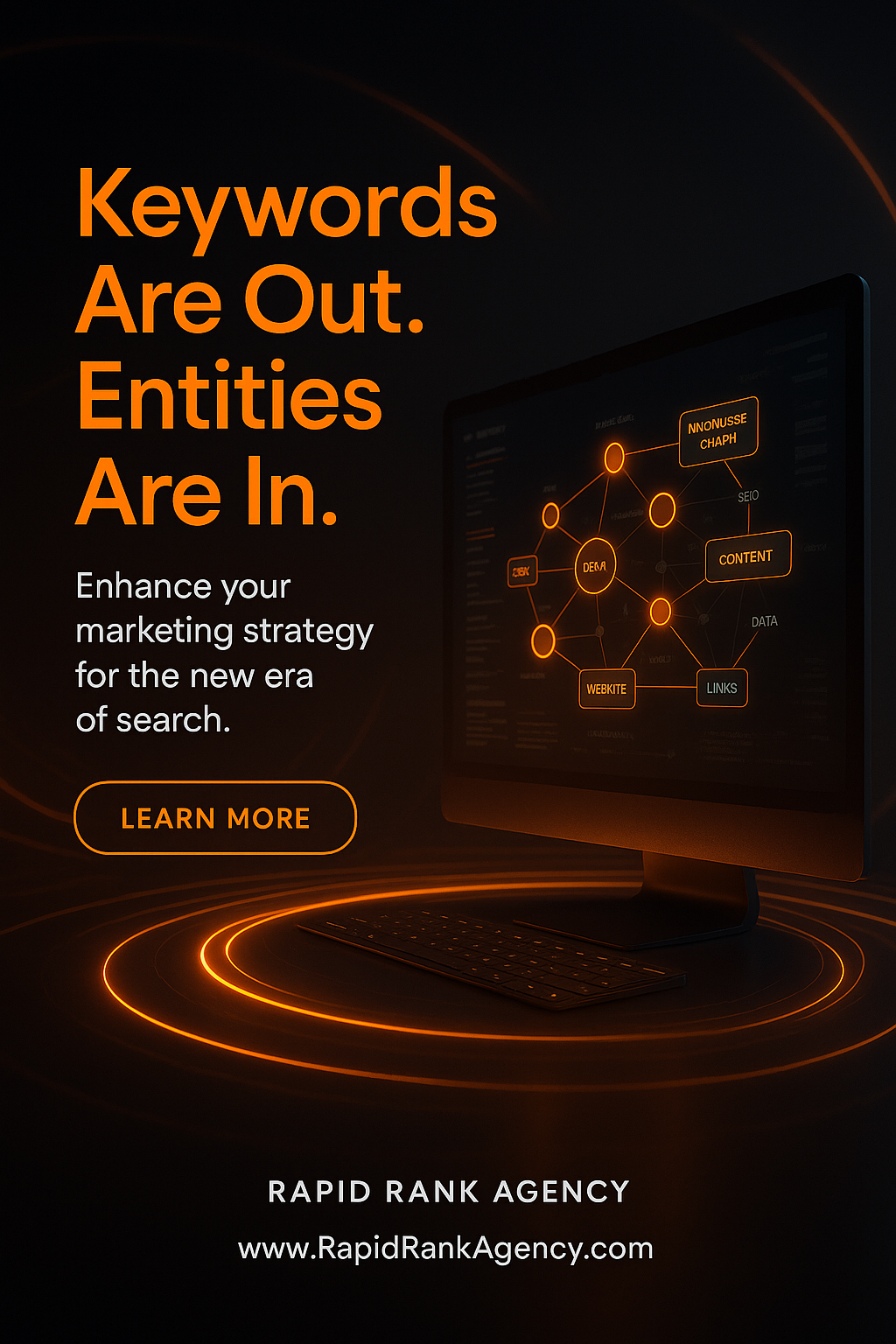
Keywords Are Out. Entities Are In.
**The Evolution of Search: From Keywords to Knowledge Graphs**
In the tumultuous landscape of digital marketing, one truth prevails above all: change is the only constant. Ten years ago, marketers were primarily concerned with stuffing their content full of the right keywords in a bid to climb to the top of search engine results pages. But the game has shifted. Now, the focus has pivoted from mere keywords to a much broader and deeper framework—the knowledge graph. This shift is not just a tweak but a fundamental change in how search engines operate and, consequently, how organizations need to approach their marketing strategies. The rise of artificial intelligence and the emphasis on providing organized, relevant information is redefining the parameters of success in the digital realm.
**Beyond Keywords: Understanding Google’s Knowledge Graph**
Launched in 2012, Google’s knowledge graph introduced a sophisticated database of real-world entities such as people, places, and brands. For a brief moment, it seemed like a novel idea that most marketers could safely overlook. After all, keyword optimization was still producing the desired results. Fast forward a decade, the launch of AI models such as ChatGPT and platforms like Perplexi, which prioritize citing sources, have significantly changed the playing field. Google responded by rolling out its own AI mode, making the knowledge graph an integral component of its operations.
What makes the knowledge graph indispensable is its ability to understand and organize information in a way that mirrors human cognition. No longer are search engines merely collating websites, they are curating a database of relevance and authenticity. This shift invites businesses and marketers to pivot their tactics not just to understand keywords, but to appreciate the broader context in which their content exists.
**Navigating the New Marketing Landscape**
Personal adaptation and strategy recalibration are imperative in navigating this ever-evolving digital space. The emphasis on knowledge graphs and artificial intelligence challenges marketers to adopt a more holistic approach, centering their efforts not just on visibility but on building legitimacy and trust. Here are several strategies to effectively align your marketing initiatives with the current trends:
– **Contextual Content Creation**: Focus on creating content that fits into larger conversations and topics rather than relying solely on isolated keyword phrases.
– **Emphasis on Source Credibility**: Ensure your content links back to credible sources. Nurturing your website as a trusted source in Google’s eyes can bolster your online presence.
– **Leverage AI and Data Analytics**: Use AI tools to analyze consumer behavior and identify emerging content areas that align with your brand’s domain.
At the core of these adjustments lies a simple yet compelling truth: marketing should not merely be about appearing first in search results but about offering genuine value that resonates within the broader knowledge ecosystem.
**Adapting to AI: A Learning Moment**
The advancement of AI-equipped search functions is not just a technological milestone; it is a gateway to new learning opportunities and an invitation for innovation. As machine learning continues to evolve, the expectation for integrated, comprehensive information grows. This shift poses a learning moment: the need to blend machine efficiency with creative human insight. Marketers should be leveraging AI not as a shadow replacement but as a complementary tool that enhances creative storytelling and strategic outreach.
Confronted with these dynamics, acknowledging the nuances of AI applications empowers marketers to anticipate trends, harness relevant data insights, and build narratives that intrigue and inform audiences in more profound ways than ever. The future of marketing will not simply be about adaptation but about actively participating in the iterative process of shaping the digital narrative.
**Questioning the Future: How Will You Lead in an AI-Driven World?**
As we look towards the future of digital marketing, one question arises: how will businesses position themselves to lead in an AI-driven world? In embracing the innovations brought forth by AI and the knowledge graph, the marketing landscape presents more than just challenges—it offers unparalleled opportunities for growth, creativity, and leadership.
Will you be content to follow the tides of change, or will you steer your brand towards new horizons of possibility? The power to choose is within reach, urging businesses not just to keep pace with industry transformations but to pioneer their paths and leave an indelible mark on the digital ecosystem.