
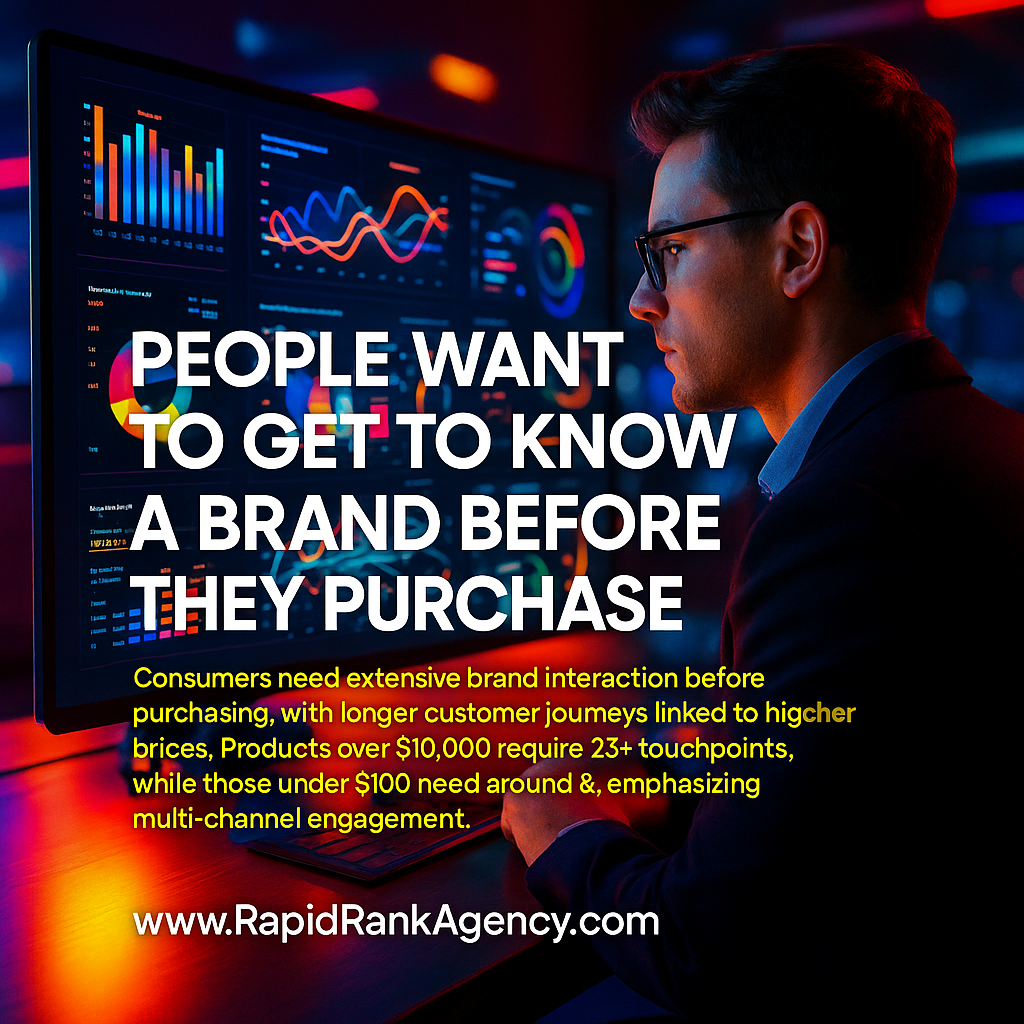
People want to get to know a brand before they purchase
**The Art of Building Trust: Navigating the Lengthy Customer Journey**
In today’s dynamic marketplace, consumers are placing more emphasis on getting to know a brand before making a purchase. This has transformed the traditional buying process, expanding it into a lengthy journey influenced heavily by the price point of the product or service. Be it Business-to-Business (B2B) or Business-to-Consumer (B2C) transactions, the journey is embedded with multiple touchpoints that play a crucial role in swaying a buyer’s decision to convert from a prospect to a loyal customer. The necessity of these engagements is not merely a trend but a required strategy for sales success.
**Understanding the Lengthy Customer Journey**
Historical sales methods often relied on quick wins and minimal touchpoints to achieve conversion. However, with consumers becoming more informed and discerning, businesses are now required to cultivate a deeper relationship with prospective buyers. This deeper connection entails extensive brand interaction, which directly correlates with the product’s price. The higher the price point, the more interaction is needed to earn the customer’s trust and commitment.
Here’s a breakdown of the average touchpoints needed based on price:
– For products priced over $10,000, the journey often requires more than 23 touchpoints.
– For products under $100, about 8 touchpoints are typically adequate.
These figures demonstrate a clear need for multi-channel engagement strategies. Customers might first discover your brand via an Instagram post, attend an informative webinar next, and later receive a follow-up email. It’s a holistic approach where each touchpoint reinforces brand presence and builds consumer trust.
**The Impact of Price on Touchpoints**
Price point heavily influences the number of touchpoints required, with high-ticket items necessitating longer and more nuanced journeys compared to lower-priced products. Let’s consider why:
– **High Perceived Risk:** Higher-priced products come with increased perceived risk. Consumers need assurance that they’re receiving value for money. Every additional touchpoint serves to mitigate this risk by reinforcing the product’s value proposition and the brand’s credibility.
– **Complexity of Product or Service:** Expensive items often come with complex features that need understanding. Webinars, video demonstrations, and detailed FAQs are instrumental in educating potential buyers and easing their buying hesitancies.
– **Broader Stakeholder Involvement:** In B2B transactions, decisions are typically made by multiple stakeholders, necessitating a variety of tailor-made interactions to address the concerns of each decision-maker involved.
For lower-priced products, the buying decision is typically simpler and less risky, which is why fewer touchpoints suffice to convert a prospect into a buyer. Here, the primary focus is on harnessing efficient and engaging channels that allow quick comprehension and a fast buying decision.
**Delivering Value Through Multi-Channel Engagement**
Leveraging multiple channels avoids the potential pitfalls of a monolithic strategy. A robust multi-channel approach can seamlessly guide a consumer through the purchasing journey by reaching them where they are and at multiple stages of their decision-making process.
Consider these channels:
– **Social Media:** Platforms like Instagram and Facebook provide initial brand exposure and facilitate engagement through interactive content.
– **Email Campaigns:** These allow businesses to nurture prospects over time, delivering personalized content directly to the consumer’s inbox and maintaining a steady presence.
– **Webinars and Live Demos:** Providing a forum for active learning and interaction, these platforms cater to detailed explorations of a product’s benefits and features.
– **Blog Posts and Content Marketing:** Educative and value-driven blog content can attract and nurture leads by addressing consumer pain points and providing solutions.
“The journey is embedded with multiple touchpoints that play a crucial role in swaying a buyer’s decision.”
Each touchpoint should not only deliver information but also invite engagement and foster a stronger relationship between the consumer and the brand.
**Harnessing the Journey to Achieve Success**
Understanding the customer journey and strategically planning each interaction can turn complex sales cycles into a seamless and rewarding experience for both consumers and brands. Here lies the learning moment:
– **Building Trust is Paramount:** Every interaction should contribute to building trust. Authenticity and transparency in communication go a long way in forging strong brand-customer relationships.
– **Personalization is Key:** Tailoring interactions to individual consumer needs increases the chances of conversion. Use data-driven insights to personalize messages and offers.
– **Consistency Builds Momentum:** Ensure message consistency across all channels for a coherent brand narrative that keeps potential customers engaged and intrigued.
By using data to understand customer behavior and preferences, businesses can craft strategies that meet consumers where they are, speak to their needs, and journey with them smoothly towards conversion.
**Engaging with the Modern Consumer**
As consumer expectations continue to evolve, the question remains: How well do you know your customer? Businesses that excel at understanding and meeting the needs of their audiences are those that thrive in a competitive marketplace.
Consider: What steps can your brand take today to enhance the consumer journey and foster deeper connections? As you reflect on this, remember that each touchpoint is an opportunity not just for engagement, but for building a lasting relationship with your audience. Through strategic interaction, businesses can ensure they are not only meeting customer needs but exceeding them at every step of the way.