
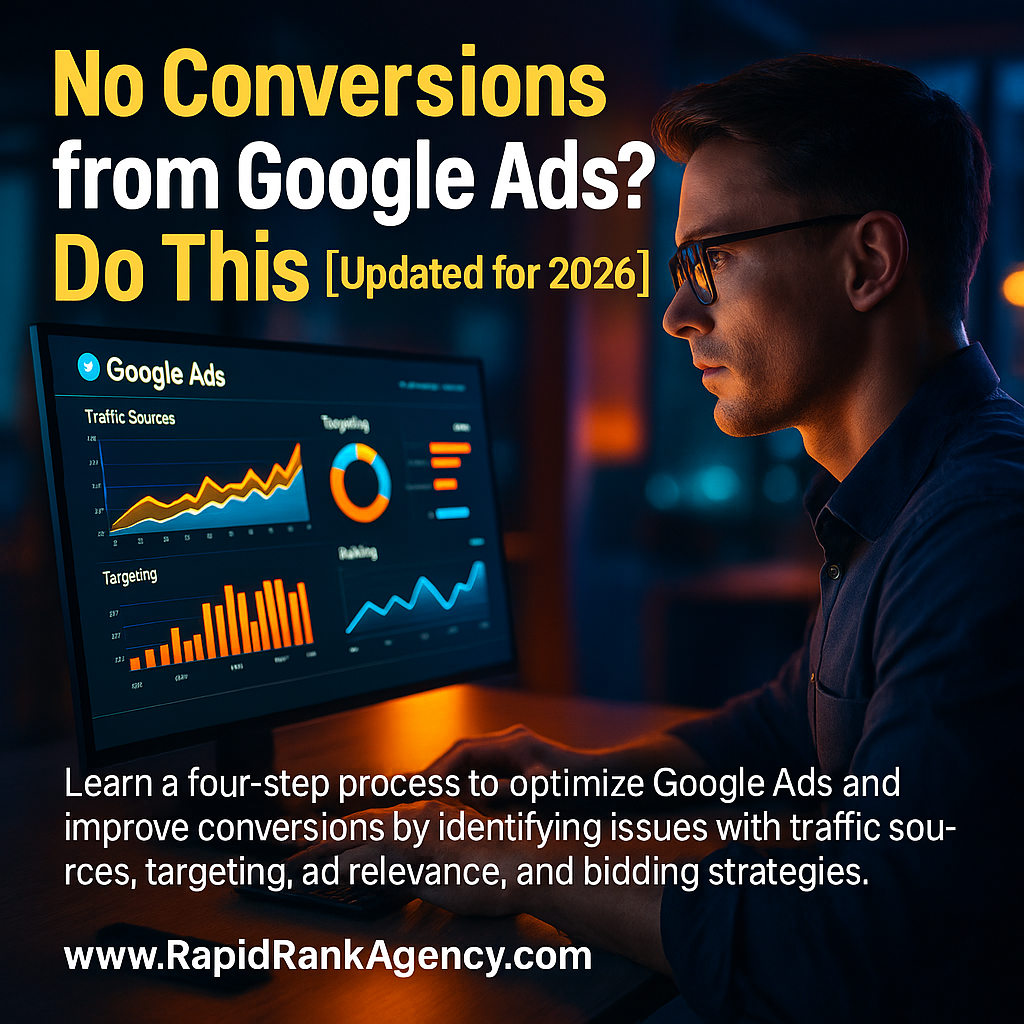
No Conversions from Google Ads? Do This [Updated for 2026]
**Unlocking Success: A Four-Step Guide to Optimizing Your Google Ads**
In today’s digital marketing landscape, optimizing Google Ads for better conversions is an absolute necessity for businesses seeking growth. Google Ads have incredible potential, but if your campaigns aren’t converting clicks into sales, it’s time to take a hard look at your approach. The good news? There’s a clear, four-step process that can help you turn things around.
**Understanding the Struggle**
We’ve all been there. You launch a Google Ads campaign with high hopes and a sense of optimism, only to watch the days turn into weeks with little to no results. It feels like you’re pouring money into a black hole. The truth is, crafting a successful Google Ads campaign is as much an art as a science. It demands a nuanced understanding of your audience and a strategic approach to targeting and ad creation. It’s not uncommon to feel frustrated, but understanding the core components of your campaign and addressing them can transform your efforts.
**Step 1: Pinpoint the Problem Sources**
One of the first steps in remedying poor conversions is identifying where the issue lies. Is it exclusive to Google Ads, or is it affecting all your traffic sources? This foundation is crucial, and tools like Google Analytics are your best friend here.
– **Traffic Source Analysis**: Are your issues stemming solely from Google Ads, or is there a broader problem with your marketing channels? Getting to the root of this is pivotal.
– **Session Duration Observations**: Short session durations often indicate misaligned targeting — your ads might be reaching the wrong people. On the other hand, long sessions with no conversions might signal issues with your offer or landing pages.
A comprehensive analysis will give you the insights needed to tailor your approach effectively.
**Step 2: Assess and Enhance Ad Relevance**
Once you’ve pinpointed the source, it’s time to verify your ad relevance. Google’s broad keyword match can be a double-edged sword; it helps you reach new audiences but can also lead to unintended targeting if not properly managed.
– **Search Traffic Relevance**: Conduct regular audits of your search terms to ensure your ads reach the appropriate audience. This step is crucial in eliminating mismatched targeting.
– **Ad Copy Precision**: “Ensure your ad copy is compelling and includes clear, factual elements, steering clear of vague claims.” Crafting precise, attention-catching ad copy can draw in the right audience and enhance conversion rates.
By refining your ad relevance, you can significantly improve the quality of your traffic and the likelihood of conversions.
**Step 3: Review and Revitalize Your Bidding Strategy**
Improper bidding strategies can severely limit the visibility and impact of your ads. Reviewing and adjusting your bidding settings is a necessary step in optimizing your Google Ads campaign.
– **Bid Evaluation**: Is your bidding strategy too conservative, limiting your visibility, or overly aggressive, eating into your budget without substantial returns?
– **Strategic Adjustments**: Consider making educated tweaks to your bid amounts and targeting parameters. Evaluate the impact over a few weeks, watching for improvements in visibility and conversion rates.
Balancing your bidding strategy can be the key to unlocking better performance from your Google Ads campaigns.
**Step 4: Monitor and Adjust for Continual Improvement**
Once you’ve followed these steps, it’s important to monitor your results over time. Optimizing Google Ads is not a one-time event but a continuous process. Flexibility and an openness to change based on data insights are crucial components of long-term digital marketing success.
– **Continuous Monitoring**: Regularly review your metrics to understand the impact of changes and identify additional opportunities for improvement.
– **Data-Driven Decisions**: Use the data you gather to make informed decisions about future adjustments to ensure the continuous optimization of your campaigns.
By executing these steps, you’re laying the foundation for a stronger, more effective Google Ads strategy.
**A Learning Curve Worth Navigating**
The process of optimizing Google Ads reminds us that successful digital marketing is not an exact formula but a dynamic process that requires constant refinement and learning from data. While the technicalities might seem daunting at first, developing these skills offers invaluable rewards and insights into consumer behavior, paving the way for improved business growth.
Are you ready to give your Google Ads campaigns a second chance at success? With perseverance, attention to detail, and a commitment to continuous improvement, these four steps could be the transformative key to unlocking your business’s potential.
**Where Do You Stand?**
As you ponder the steps above, consider this: How well do you know your current Google Ads landscape? What adjustments can you make today to begin noticing improvements? Reflect on these questions and use them as your guiding light to navigate the evolving world of digital advertising. Your journey to better conversions starts here.