

Is Quality Score Used in the Google Ads Auction?
**Understanding Google’s Real-Time Ad Quality: What Really Impacts Your Ad Rank**
In the constantly evolving world of digital marketing, advertisers strive to optimize and master their ad placements on platforms like Google. There seems to be a common misconception about what truly impacts ad rank, especially when it comes to quality scores. While many focus on the 1 to 10 quality score Google provides, it’s essential to understand this is merely a diagnostic tool and not used in determining your ad’s performance in real-time auctions. Instead, Google’s real-time assessment of your ad quality is what plays a pivotal role in your ad’s ranking. This nuanced distinction is crucial for advertisers looking to effectively manage their online presence and campaigns.
**The Misunderstanding of the Quality Score**
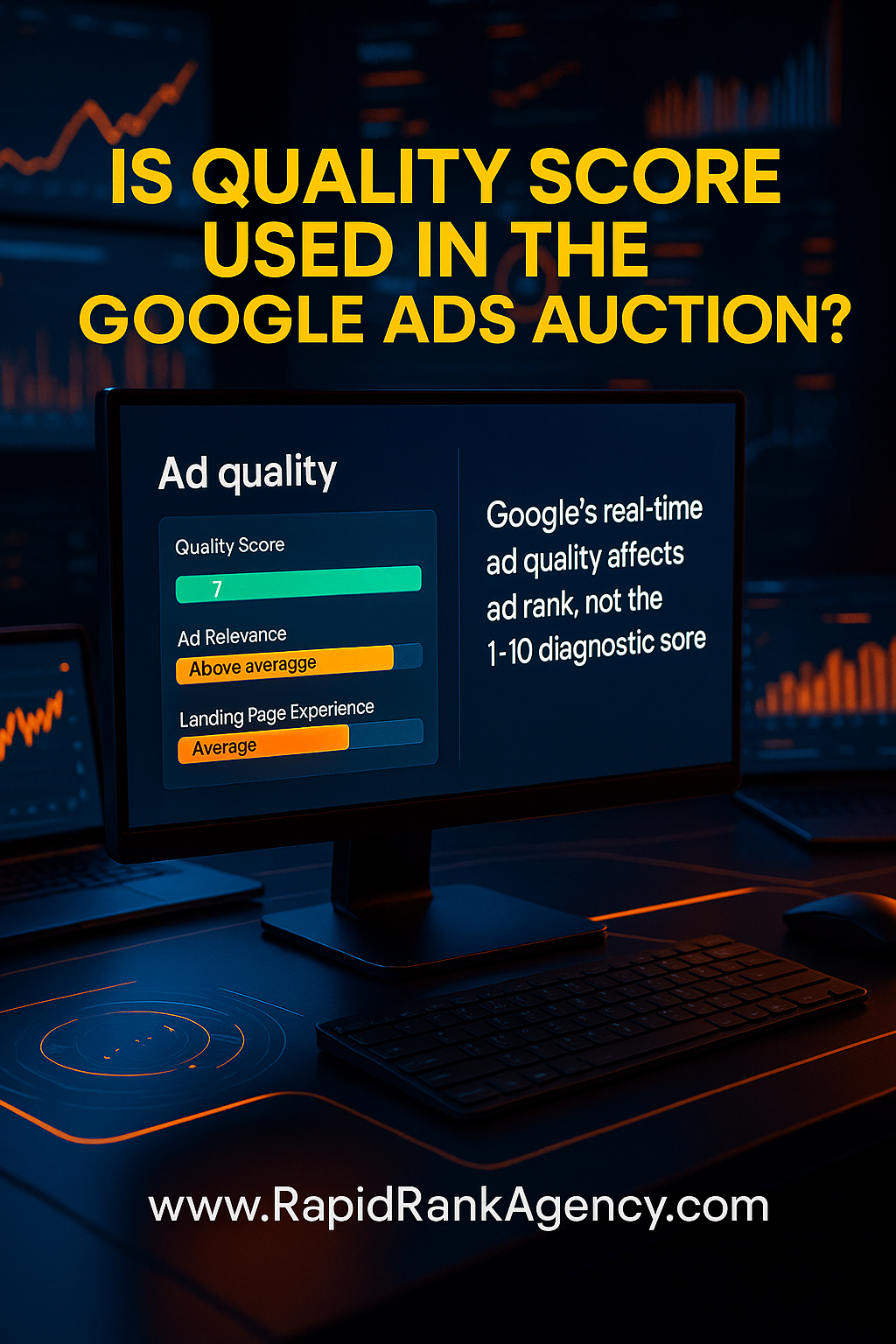
At first glance, Google’s quality score appears integral to an ad’s success. However, the number from 1 to 10 seen in the quality score column is a diagnostic tool. This score, often scrutinized by advertisers, is not directly used in Google’s ad auction. It serves as a guide to help marketers identify how well their ads, keywords, and landing pages are performing relative to others, but it’s not the direct factor in auction outcomes.
Why does this matter? Because it shifts the focus from a static score to more dynamic aspects of ad performance. Understanding this distinction can help advertisers concentrate on refining other elements that Google actually uses to determine real-time ad quality and, ultimately, ad rank.
**Real-Time Ad Quality: The Key to Google’s Ad Rank**
When it comes to what happens during an ad auction, Google’s real-time calculation of ad quality for each specific user search is what truly influences ad rank. Your potential customers see ads in a highly personalized manner, thanks to Google’s complex algorithms which assess the relevance and effectiveness of your ad instantaneously.
Here’s what makes up this real-life ad quality:
– **Expected Click-Through Rate (CTR):** This is a prediction of the likelihood that your ad will be clicked when shown. It considers past performance timings to project future actions.
– **Ad Relevance:** Google examines how closely your ad matches the keyword and search query. More relevant ads typically contribute to a higher ad rank.
– **Landing Page Experience:** The user experience once they land on your page after clicking the ad plays a significant role. Google favors pages that provide a seamless, useful, and relevant user experience.
These facets are dynamic, varying greatly depending on the specific keywords, audience, and context of the user search. Thus, focusing on these aspects is critical to improving the real-time ad quality, which is summarized in your overall quality score but calculated freshly for each auction.
**Flipping Focus: What Advertisers Should Prioritize**
Recognizing what truly affects ad rank shifts priorities for marketers and advertisers. Here are several strategies to enhance your ads’ real-time quality:
– **Optimize for User Relevance:** Continuously tailor your ad content and keywords to align with your audience’s real-time needs and search intent. A deep understanding of what your audience is truly seeking can significantly enhance ad relevance and engagement.
– **Enhance Landing Page Quality:** Ensure that your landing pages are not only relevant to the ads and keywords driving traffic to them but also provide a compelling user experience. Fast load times, mobile-friendliness, and valuable content can greatly improve user satisfaction and conversion rates.
– **Refine Ad Content for Better CTR:** Regularly audit and test different ad texts and formats to identify what works best for your audience. By crafting compelling call-to-actions and using clear, concise language, your ads can achieve higher engagement.
Learning that the real-time ad quality is what drives performance, not the diagnostic score, offers advertisers a more nuanced understanding. By investing time and resources into optimizing the dynamic factors Google uses, businesses can better position themselves in ad auctions, resulting in improved ad placements and, ideally, better returns on investment.
**The Value of Continuous Learning in Digital Marketing**
Digital marketing, particularly on platforms like Google, demands continuous learning and adaptation. Decisions based on outdated understandings, such as over-relying on the diagnostic quality score, can limit the effectiveness of campaigns. Embracing the role of real-time ad quality requires marketers to remain flexible, informed, and responsive to the ever-shifting landscape of digital advertising.
**Closing Thought: Are You Focused on the Right Metrics for Success?**
In your digital marketing efforts, do you find yourself overly fixated on static metrics like the quality score, or are you diving deeper to refine your real-time ad quality strategy? Reflecting on your approach can uncover opportunities for growth and greater effectiveness in your campaigns. As you navigate the constant changes in the digital advertising world, staying informed and agile in your strategies will be key to sustained success.