

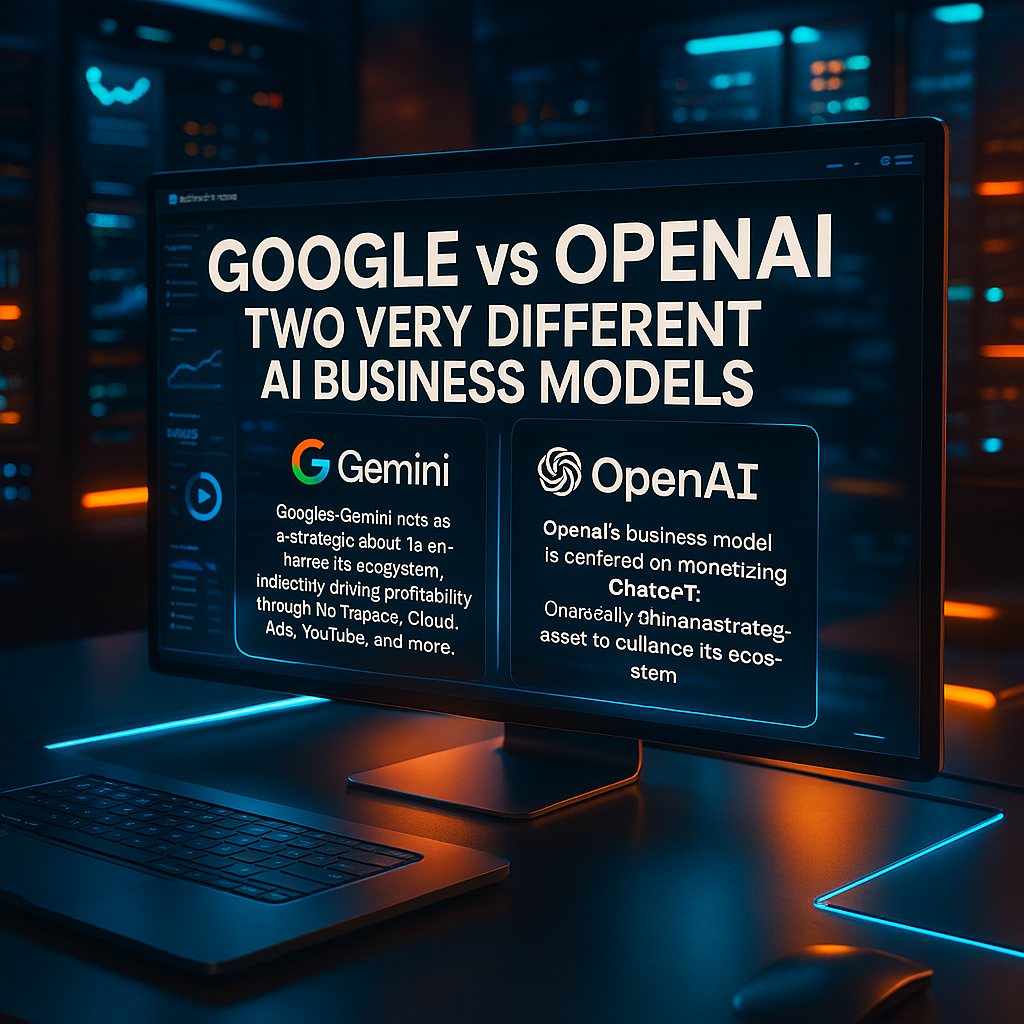
Google vs OpenAI: Two Very Different AI Business Models
**Navigating the AI Landscape: Google vs. OpenAI’s Business Models**
In the rapidly evolving world of artificial intelligence, understanding the distinct strategies that tech giants like Google and OpenAI employ is crucial. Contrary to popular belief, these two companies are not competing on the same playing field when it comes to AI business models. OpenAI has positioned itself as a direct service provider, monetizing its popular product, ChatGPT, through subscription and API fees. Meanwhile, Google’s approach is fundamentally different, leveraging its AI arm, Gemini, as a means to bolster an already expansive and profitable ecosystem. This difference in strategies is not just a trivial fact; it’s pivotal to comprehending the current and future dynamics of the AI industry.
**OpenAI’s Direct Monetization Approach**
OpenAI’s business model is straightforward yet effective, focusing solely on the monetization of its AI-driven product, ChatGPT. At the core of this model is user subscription, with individuals paying $20 per month for premium access. Beyond individual users, OpenAI extends its reach to enterprises, charging hundreds or even thousands of dollars monthly for API access. The reasoning here is simple and purposeful: “Because ChatGPT is their business.”
For OpenAI, each ChatGPT subscription is a direct line to revenue. This singular focus on their AI product as the central point of profit fuels their development and operational strategies. By continuing to innovate and enhance the capabilities of ChatGPT, OpenAI aims to attract more users, create value, and ultimately boost their profitability. For those interested in tech developments, OpenAI’s business model offers a clear demonstration of focusing entirely on one service as a revenue engine.
**Google’s Strategic Ecosystem Enhancement**
Google’s AI strategy diverges significantly from that of OpenAI. Unlike OpenAI, Google’s Gemini is not designed to be a standalone profit center. Instead, Gemini functions as a strategic asset—one that is embedded within and enhances Google’s broader business ecosystem. Google, which reported over $116 billion in annual profit, uses Gemini to drive users into various segments of its operations such as Google Workspace, Google Cloud, Google Ads, and YouTube.
The brilliance of Google’s approach lies in the indirect monetization of its AI innovations. By integrating Gemini into its existing services, Google ensures that users remain within its digital ecosystem. This kind of strategic growth is reminiscent of an interconnected web, where each component feeds into another, maximizing user retention and profitability without the need for Gemini itself to be immediately profitable. As a result, the AI itself doesn’t need to be a profit center; its role is to “keep you inside Google’s world where they monetize you in 10 other ways.”
**Key Learning Moment: The Nuanced Business Models of AI Giants**
There are significant lessons to be learned from examining the business models of OpenAI and Google. For startups or businesses looking to explore AI and tech industry dynamics, understanding these models provides valuable insights.
1. **Monetization Focus**: OpenAI exemplifies how a single product with clear monetization can lead to substantial business success. With a direct-to-consumer and B2B approach via subscriptions and API fees, OpenAI keeps its focus narrow yet profitable.
2. **Strategic Integration**: Google’s model showcases the power of leveraging AI as a value-add rather than a primary revenue driver. By integrating AI solutions across a suite of services, Google enhances user experience and engagement, thereby amplifying its existing revenue streams.
3. **Long-Term Ecosystem Building**: Google’s strategy underscores the importance of creating a robust, interconnected ecosystem, where each service complements and strengthens the others, driving long-term customer retention and profitability.
**Engagement Query: What Drives AI Business Success?**
The AI industry is expansive and multifaceted, and its models of business success vary dramatically. As you ponder these differing approaches, what do you think holds the key to lasting success in the AI market? Is it a clear, product-focused monetization strategy like OpenAI’s? Or is it a sophisticated, ecosystem-driven approach akin to Google’s? With the constantly changing technology landscape, how might these models evolve, and what new opportunities could they create? Your insights and reflections on these questions could illuminate further growth and innovation possibilities in the AI space.
Understanding these models not only clarifies the current landscape but also prepares industry enthusiasts and potential entrepreneurs to navigate and innovate in the competitive AI market effectively. Whether you are more intrigued by OpenAI’s direct monetization or Google’s strategic integration, the future of AI promises to be captivating and full of opportunity.